
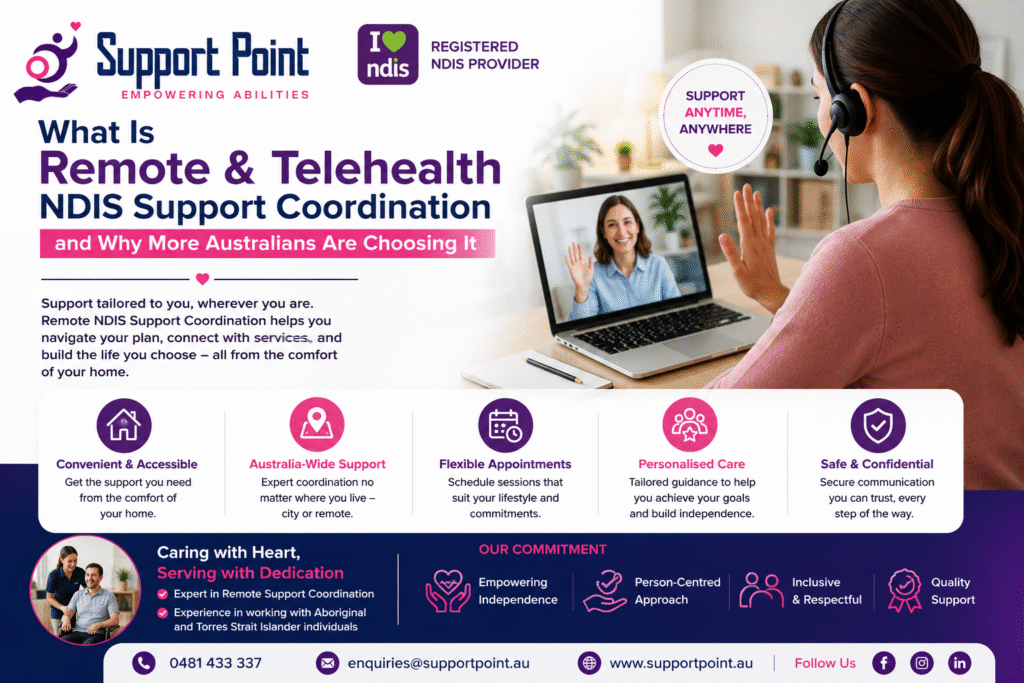
The way Australians access disability support is changing rapidly. With technology making services more accessible than ever, many participants are now turning to remote and telehealth support to manage their NDIS plans more effectively. For individuals living in regional, rural, or even busy metropolitan areas, remote support coordination offers flexibility, convenience, and personalised guidance without the need for face-to-face appointments.
As more participants seek efficient ways to navigate the NDIS, remote and telehealth support coordination has become one of the most practical service options across Australia.
What Is Remote & Telehealth NDIS Support Coordination?
Remote and telehealth NDIS support coordination is the delivery of support coordination services through digital communication methods rather than in-person meetings. This can include:
- Phone calls
- Video conferencing
- Email communication
- Messaging platforms
- Online document sharing
The goal remains exactly the same as traditional support coordination: helping participants understand their plan, connect with providers, manage supports, and build greater independence. The only difference is that it happens remotely, allowing participants to receive expert assistance wherever they are located.
Why More Australians Are Choosing Remote Support Coordination
Greater Accessibility Across Australia
Many participants live in regional and remote communities where local service options may be limited. Remote support coordination removes location barriers by connecting participants with experienced coordinators regardless of where they live.
This means someone in a rural town can access the same quality support as someone in a major city.
Flexible Appointment Options
One major reason for its popularity is flexibility. Participants can schedule sessions at times that work best for them without worrying about travel, waiting rooms, or transport arrangements.
Remote appointments are especially helpful for:
- Busy families
- Participants with mobility challenges
- Individuals in isolated communities
- People who prefer support from home
How Remote NDIS Support Coordination Works
The process is simple and participant-friendly.
Initial Consultation
The coordinator begins by understanding:
- Your current NDIS plan
- Your personal goals
- Existing services
- Areas where you need support
- Preferred communication style
This consultation can happen through video call or phone.
Plan Navigation
Your coordinator helps explain:
- Funded supports
- Budget categories
- Service options
- Provider choices
- Review preparation
They ensure you understand how to use your plan effectively.
Service Connection
Remote coordinators can assist with connecting you to:
- Allied health professionals
- Support workers
- Community programs
- Therapy services
- Housing and accommodation supports
- Employment supports
Because they often work Australia-wide, they may help you access a broader provider network than local-only services.
Key Benefits of Telehealth NDIS Support Coordination
1. Convenience
You can attend meetings from:
- Home
- Workplace
- Community centres
- Rural properties
- Remote communities
No travel is required.
2. Faster Access to Services
Participants often avoid long wait times by working with remote coordinators who can respond more quickly.
3. More Choice and Control
Remote delivery gives participants access to a wider range of providers, allowing better matches for:
- Cultural preferences
- Language needs
- Specialist expertise
- Complex support needs
4. Consistent Ongoing Support
Even if you move to a different city or region, your remote coordinator can continue supporting you.
Why Remote Support Is Especially Important for Regional and Rural Australia
Australia’s large geography can make service access difficult for many NDIS participants.
Challenges often include:
- Limited local providers
- Long travel distances
- Higher transport costs
- Fewer specialist services
- Delayed appointments
Remote support coordination helps overcome these barriers by bringing services directly to participants through digital tools. This is why it has become increasingly popular in rural communities across the country.
Is Remote Support Coordination as Effective as In-Person Support?
For many participants, yes.
Support coordination focuses heavily on communication, planning, advocacy, and service linking — all of which can be effectively delivered through telehealth.
Remote support works particularly well because coordinators can:
- Hold regular check-ins
- Share documents instantly
- Track progress online
- Coordinate providers quickly
- Support plan reviews virtually
Many families find it easier because multiple family members or carers can join virtual meetings from different locations.
Who Can Benefit Most?
Remote and telehealth support coordination can benefit:
Participants in Rural Areas
Ideal for individuals with limited local service access.
First Nations Communities
Culturally respectful remote services can improve accessibility and trust when delivered by experienced providers.
Participants with Transport Challenges
Those unable to travel regularly can receive full support from home.
Families Seeking Flexible Support
Parents and carers can attend appointments more easily around daily schedules.
Why Telehealth Support Continues to Grow
Several factors have accelerated adoption:
Digital Comfort
Australians are increasingly comfortable using:
- Zoom
- Microsoft Teams
- Phone consultations
- Secure online forms
- Email communication
Better Technology
Improved internet access has made remote service delivery smoother.
Participant Preference
Many people simply prefer the comfort and privacy of receiving support in familiar surroundings.
Choosing the Right Remote Support Coordination Provider
When selecting a provider, look for:
Experience
Choose a provider with a strong understanding of NDIS systems.
Communication Options
The best providers offer:
- Phone
- Video
- Flexible communication methods
Cultural Respect
This is especially important for First Nations participants and culturally diverse communities.
Australia-Wide Service
A provider with nationwide reach can offer broader options and better service matching.
The Future of NDIS Support Coordination
Remote support coordination is not just a temporary trend. It is becoming a long-term part of how disability services are delivered across Australia.
As technology improves, more participants are choosing remote support because it offers:
- Accessibility
- Flexibility
- Personalised care
- Faster service
- Greater independence
It empowers participants to manage their NDIS journey without being limited by location.
Conclusion: Why Support Point Is a Trusted Choice
If you or your family are exploring remote and telehealth support coordination, choosing an experienced provider makes a significant difference.
Support Point Australia offers personalised, culturally respectful NDIS support coordination services for participants across Australia. Their experienced team provides remote and telehealth support designed to help participants understand their plans, connect with the right services, and achieve greater independence no matter where they live.
Whether you are in a regional community, a remote area, or simply prefer flexible online support, they provide trusted guidance to help you navigate your NDIS journey with confidence.